Fume extractor
manufacturers
in India.
Capture fumes at the source. Choose an extraction solution around your process, your materials and the way your team works.
Explore NAPCEN welding, laser, soldering, laboratory, gold and printing fume extractors.
Request a technical quotation
Welding & fabrication
Metal fumes and process smoke
Laser & electronics
Fine particles and flux fumes
Laboratory & gold
Process-specific extraction
Printing operations
Vapour and particulate assessment
Trusted By Industry Leaders
A few of the brands we've grown alongside





























Cleaner air starts
at the source.
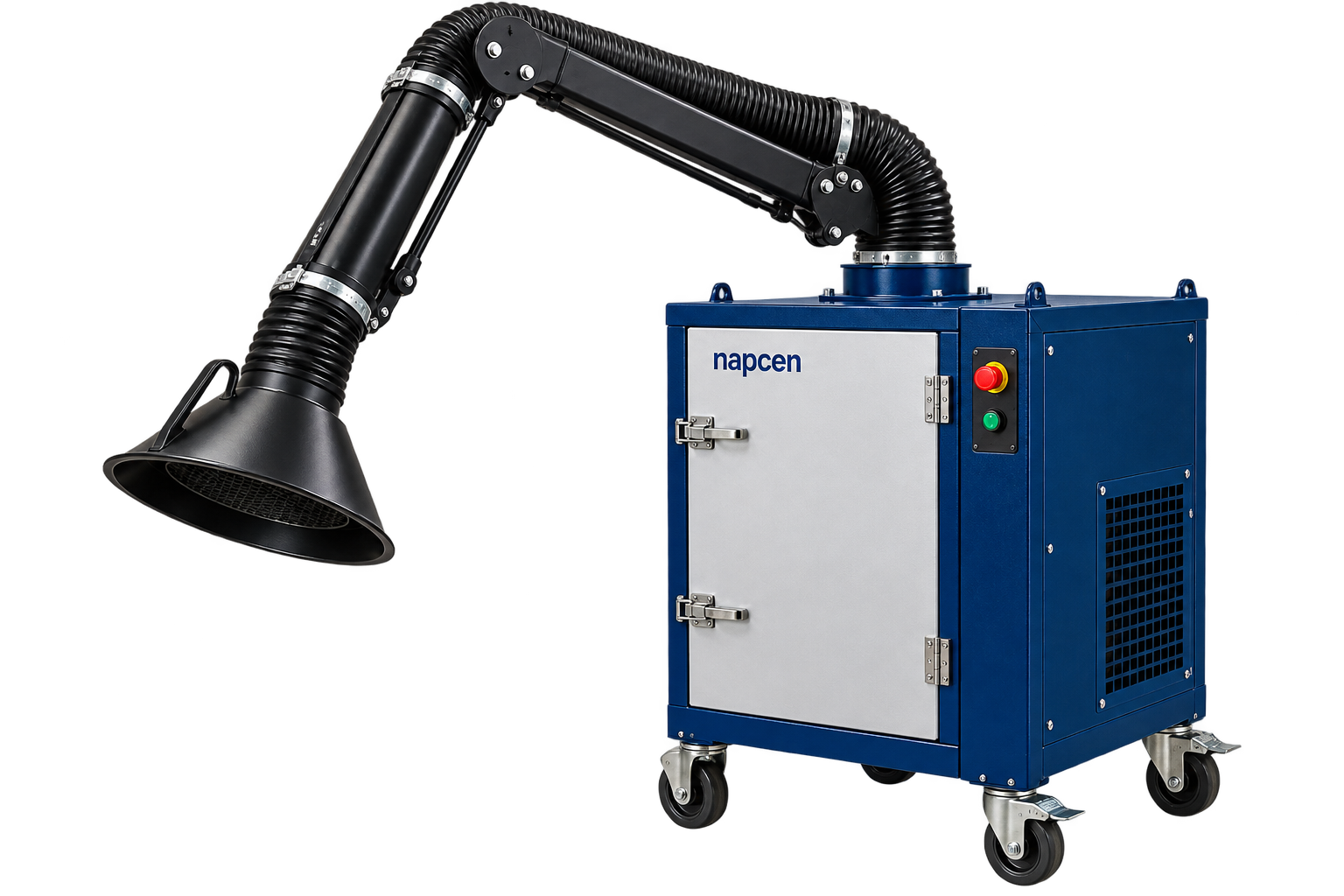
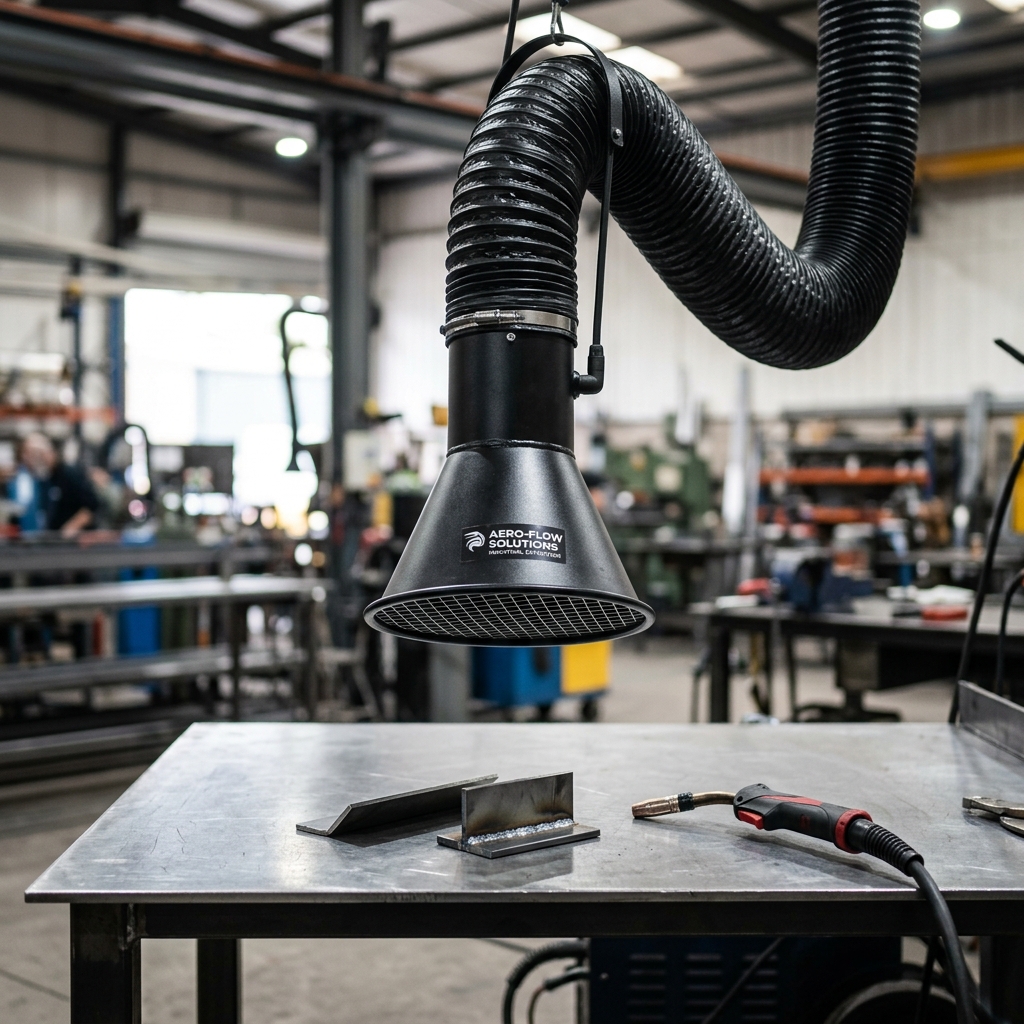
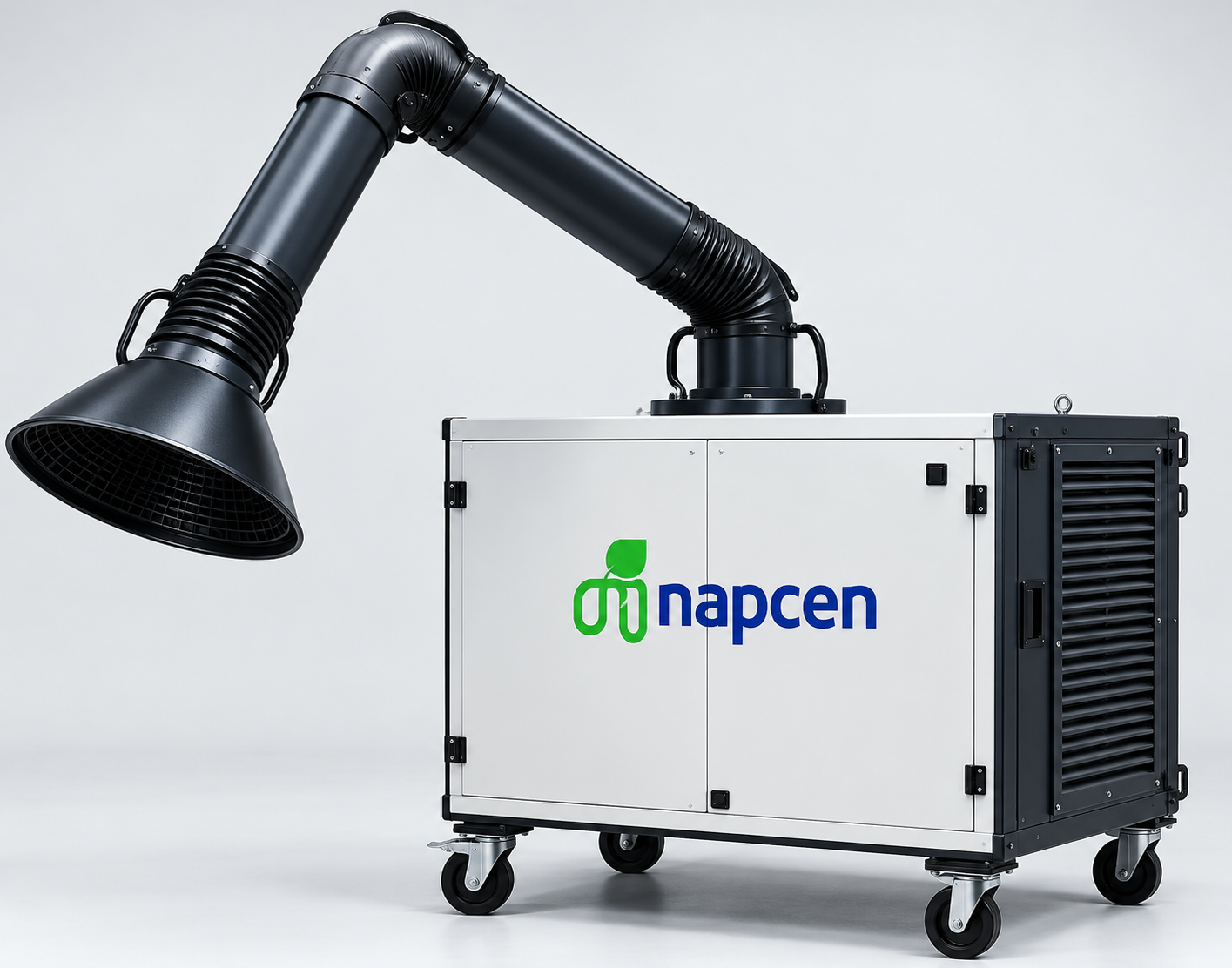
A fume extractor collects contaminated air near a process before fumes disperse through the workspace. A hood or enclosure, extraction fan and selected treatment stages work together as one system.
Good selection starts with what is in the air. Welding particles, laser smoke and solvent vapours have different treatment needs. NAPCEN's product range gives you a starting point for an application-specific discussion.
One goal. Six ways
to capture fumes.
Explore the fume extractor products listed by NAPCEN. Start with your process; confirm the final configuration through an engineering review.
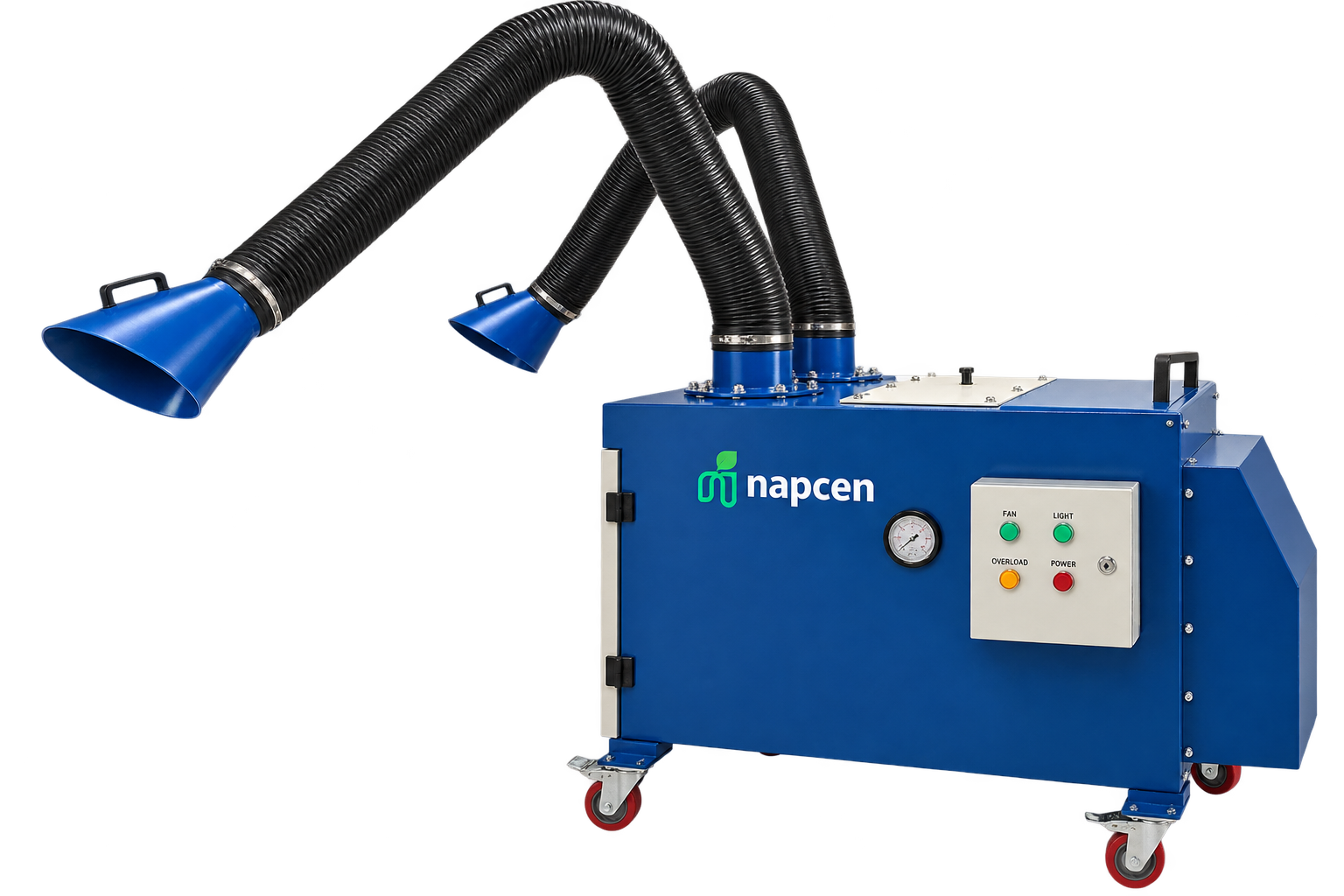

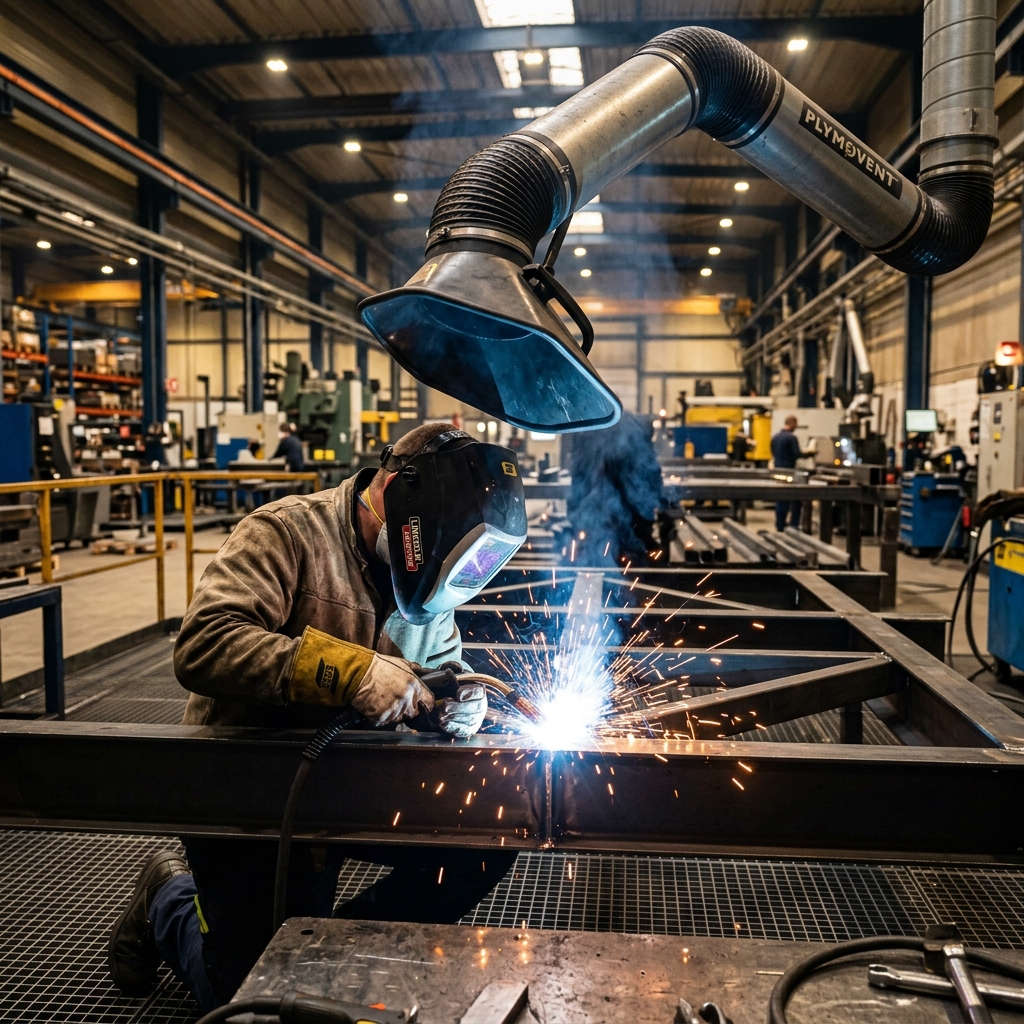
Welding fume extractor
Capture welding smoke closer to the arc. Plan the hood position around the welding process, component size and operator movement.
- Metal particulate loading
- Workstation access
- Shielding-gas compatibility
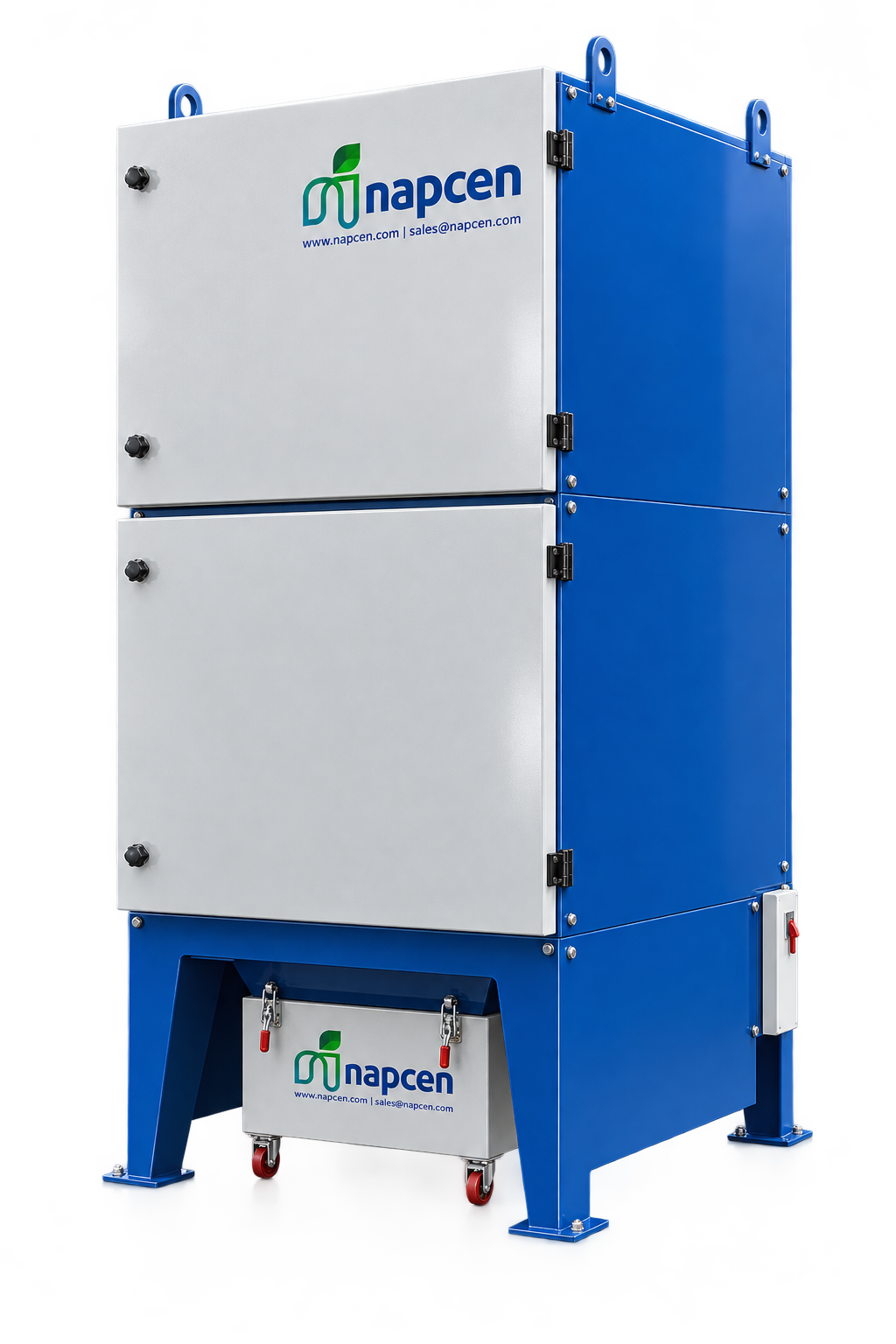
Laser fume extractor
Collect fine particles and process smoke at the laser enclosure. Material composition determines the filtration and discharge arrangement.
- Enclosure extraction
- Fine-particle filtration
- Material-specific assessment
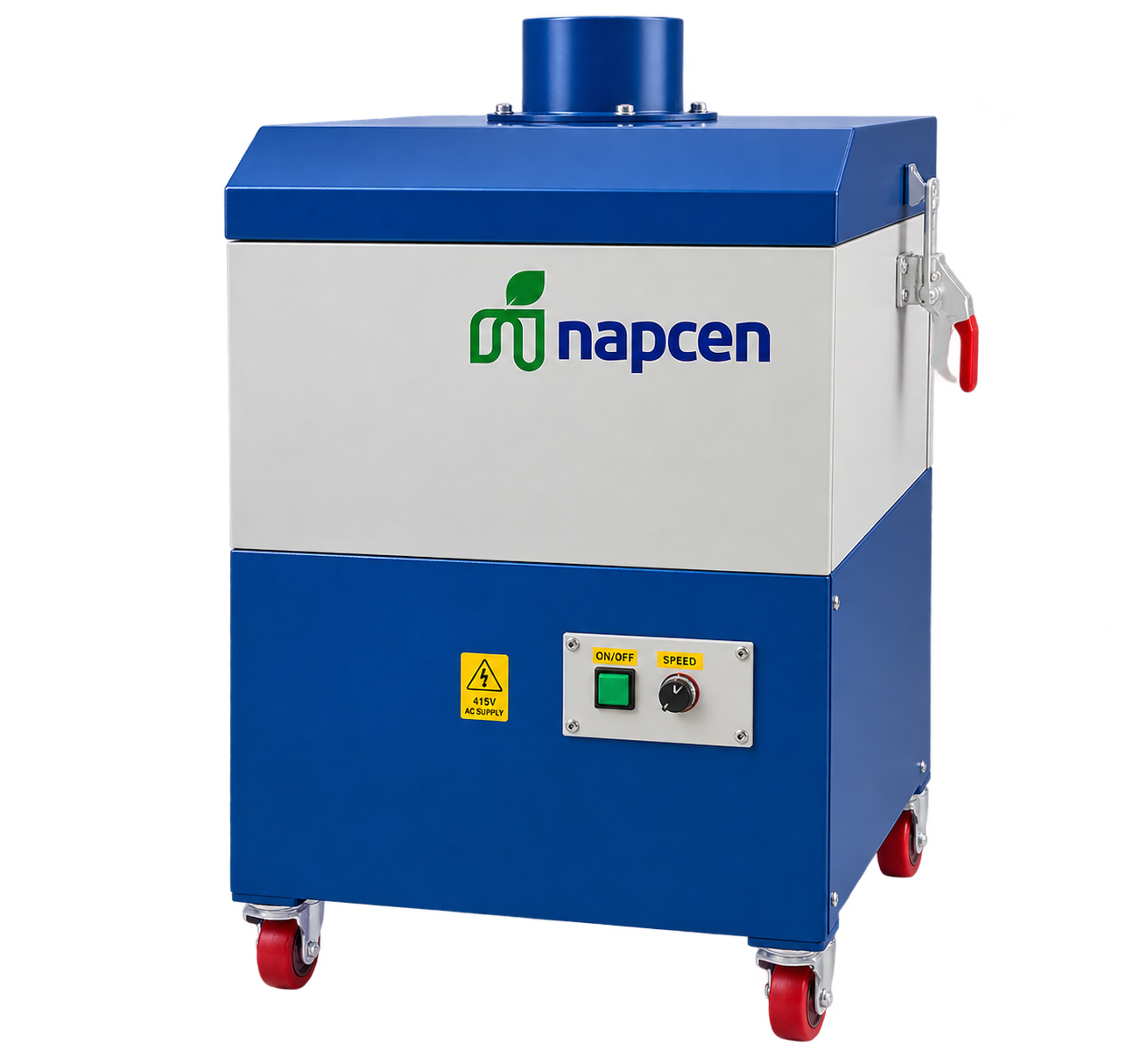
Soldering fume extractor
Bring extraction to the soldering point to collect flux smoke before it spreads across the bench. Match each capture point to the working area.
- Bench-level capture
- Flux-fume assessment
- Filter access
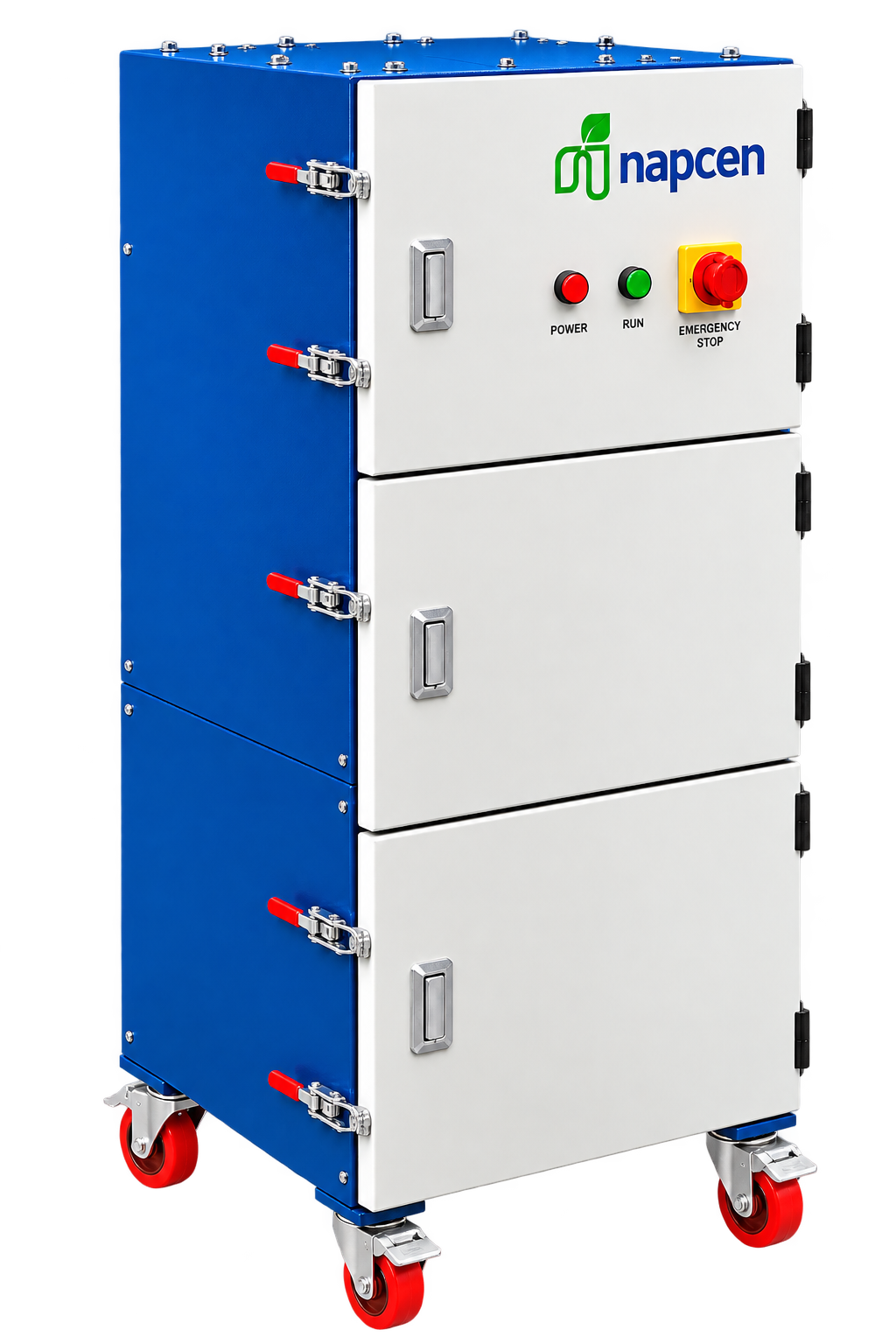
Laboratory fume extractor
Select local extraction around the substances used, their concentrations and the laboratory workflow. Vapour duties need chemistry-specific treatment.
- Chemical compatibility
- Containment review
- Suitable discharge
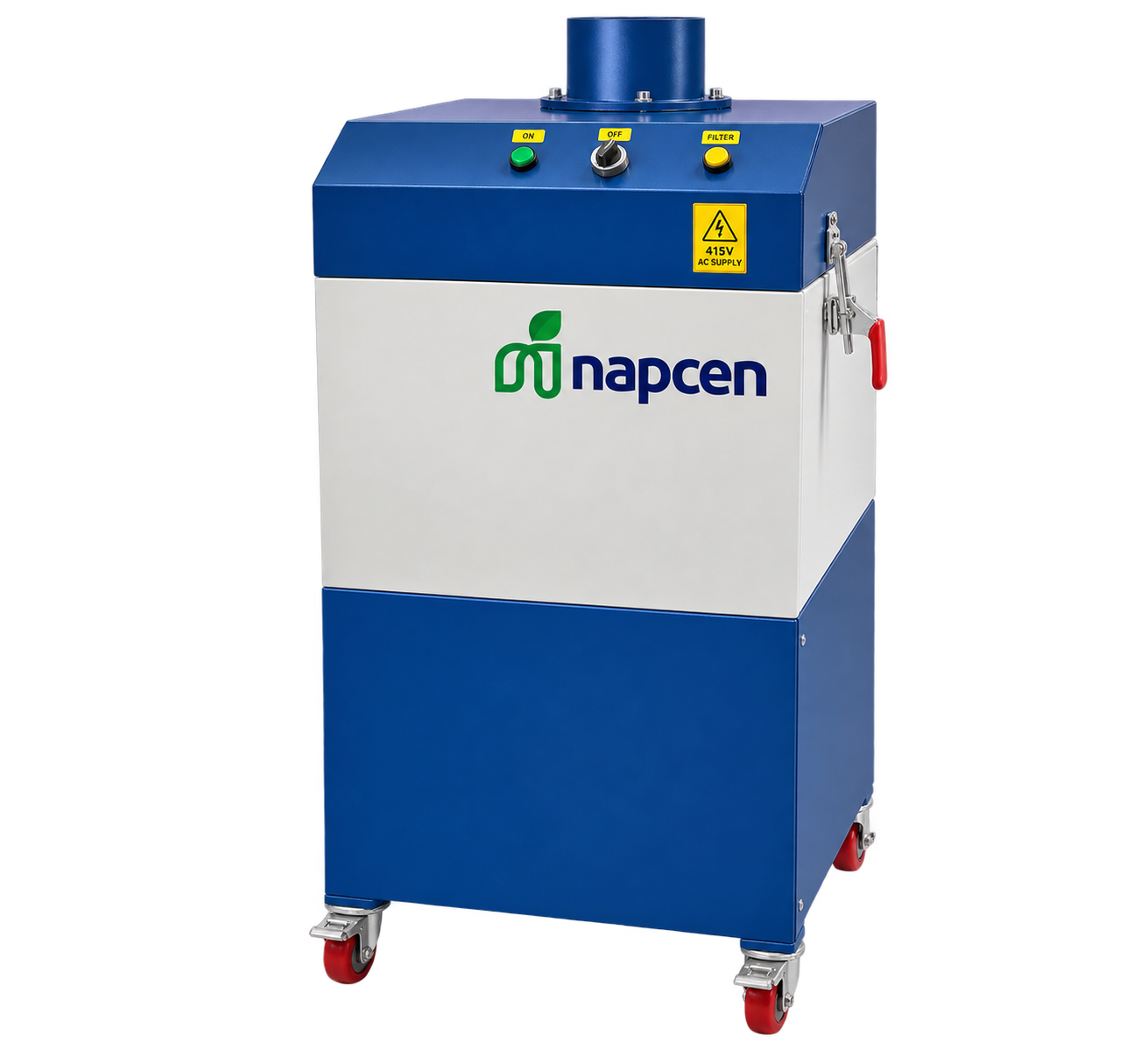
Gold fume extractor
Evaluate extraction for gold-processing operations by identifying metal fumes, fine particles and any acid vapours separately. Each requires a suitable treatment route.
- Process-specific capture
- Metal particulate control
- Acid-vapour review
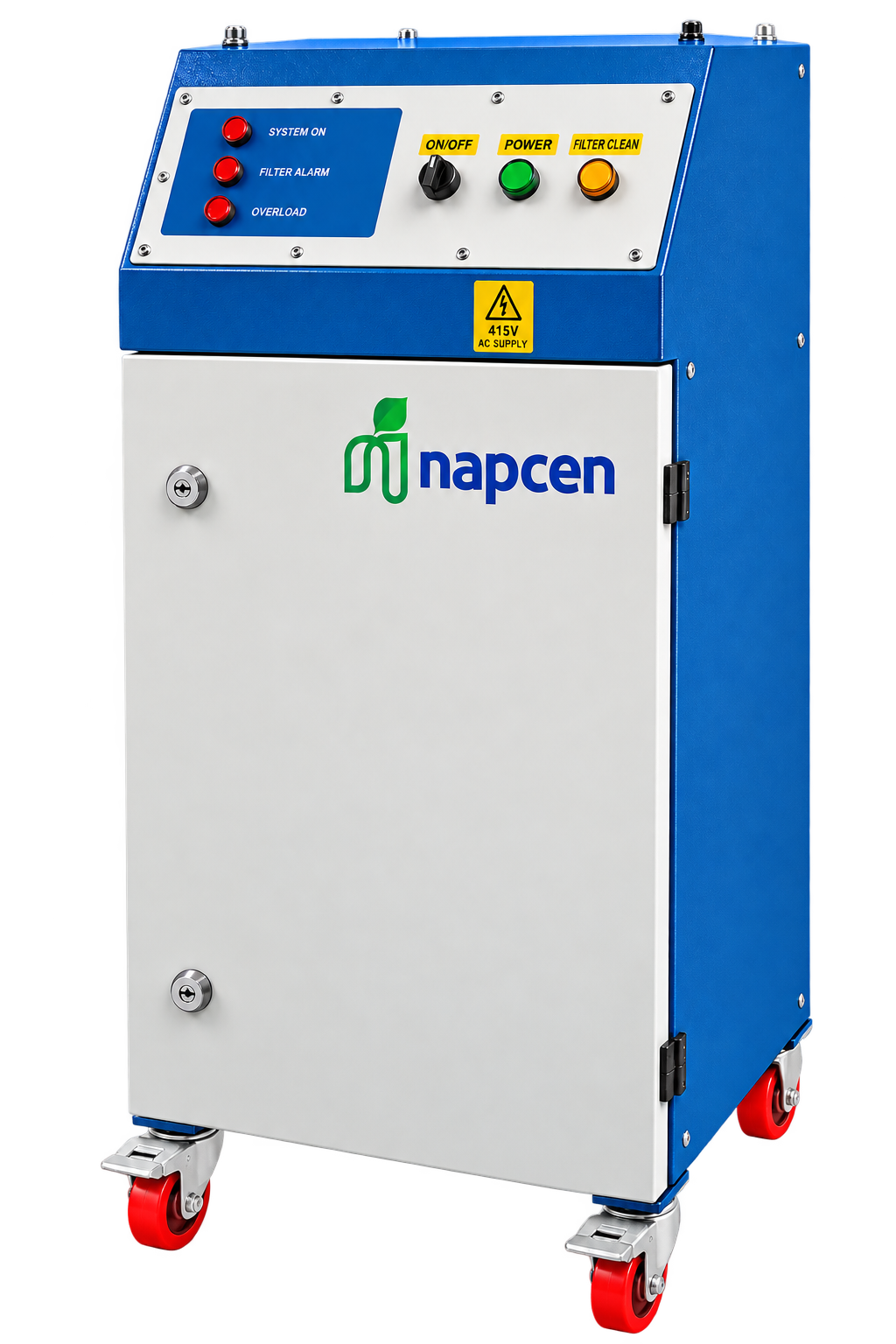
Printing fume extractor
Capture emissions around printing and associated handling processes. Solvent identity and vapour loading guide adsorption or other treatment selection.
- Ink and solvent data
- VOC treatment review
- Planned media replacement
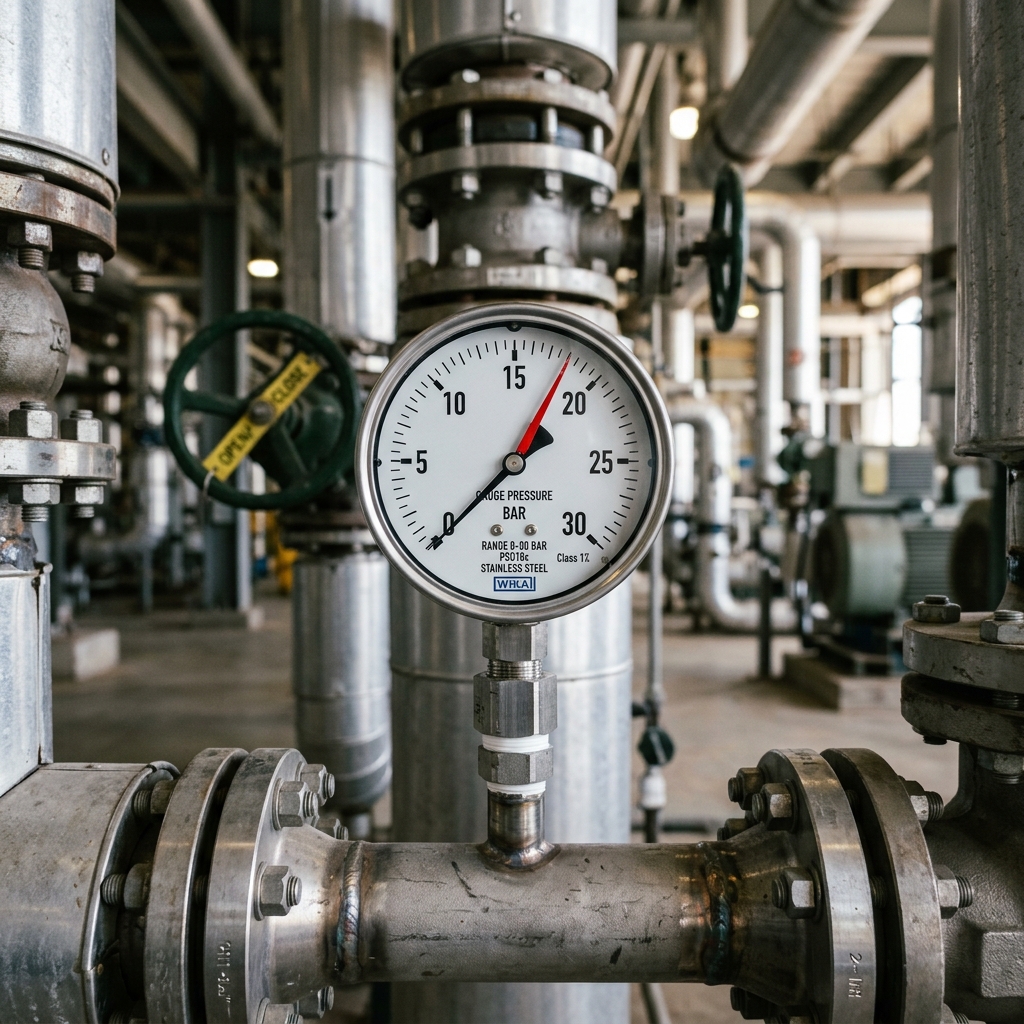
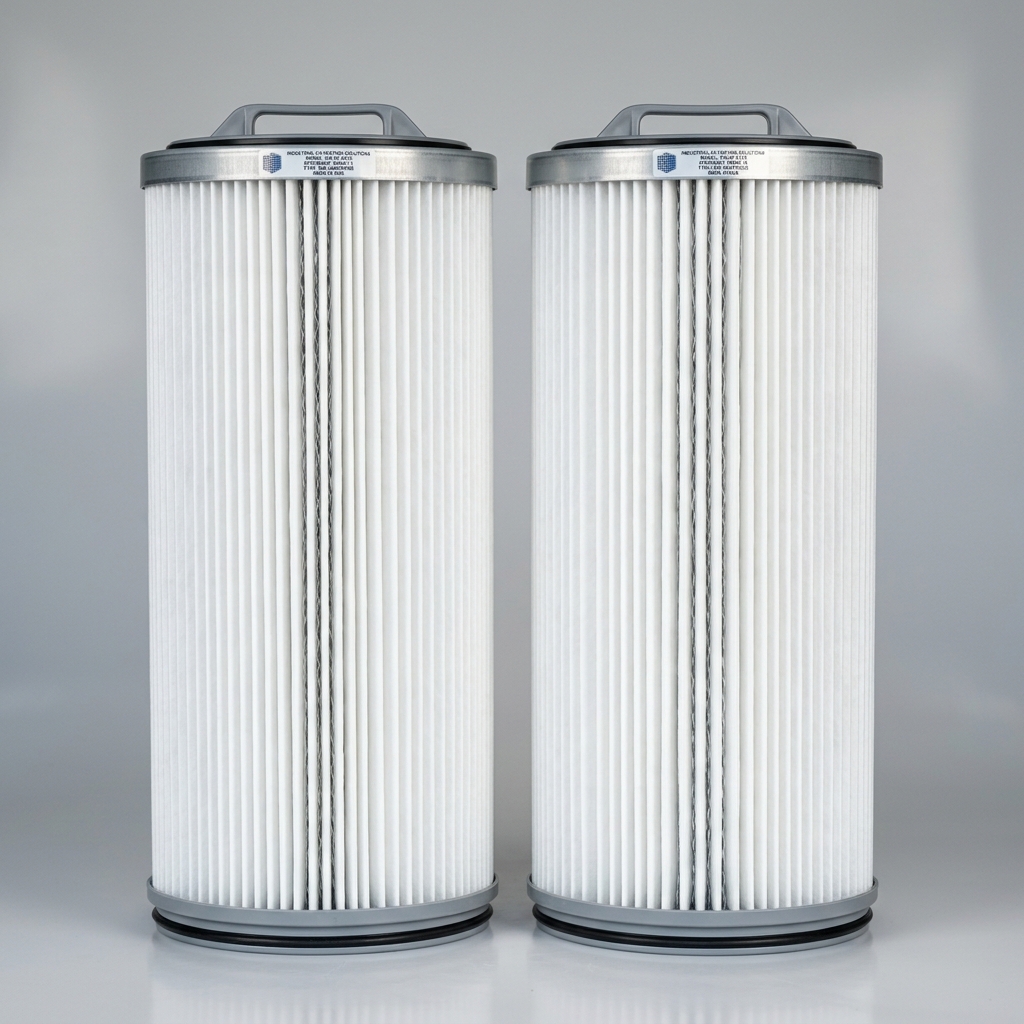
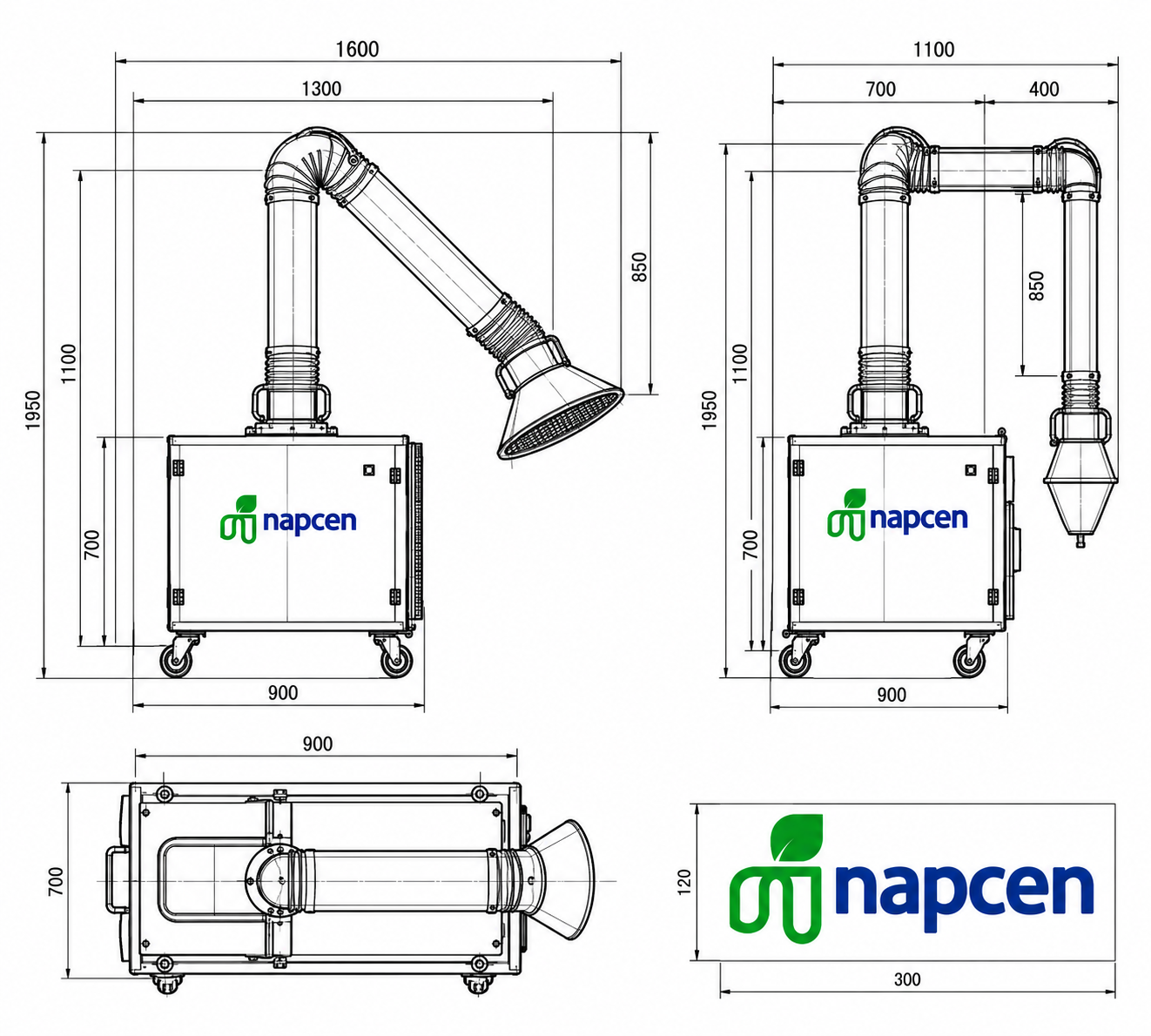
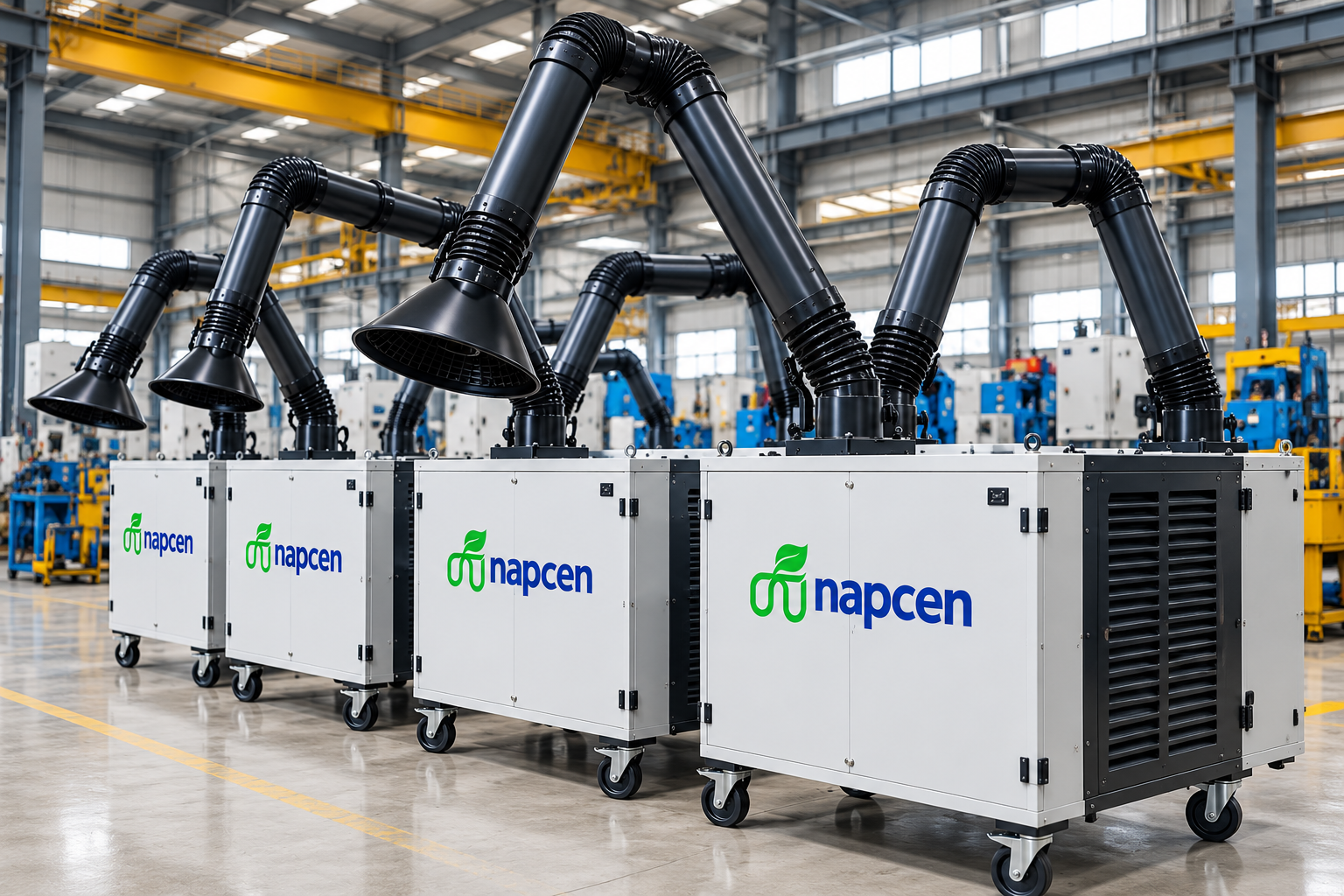
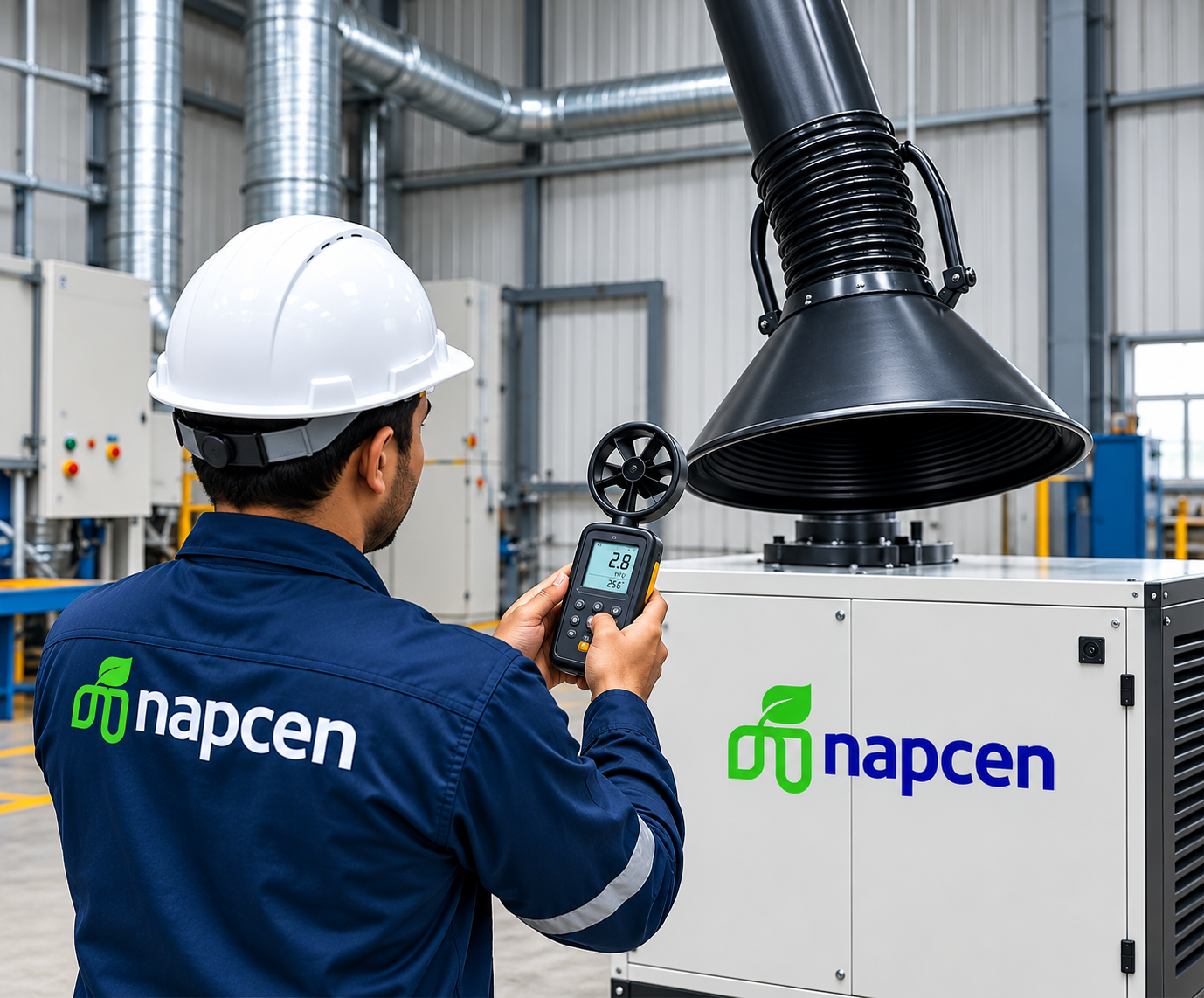
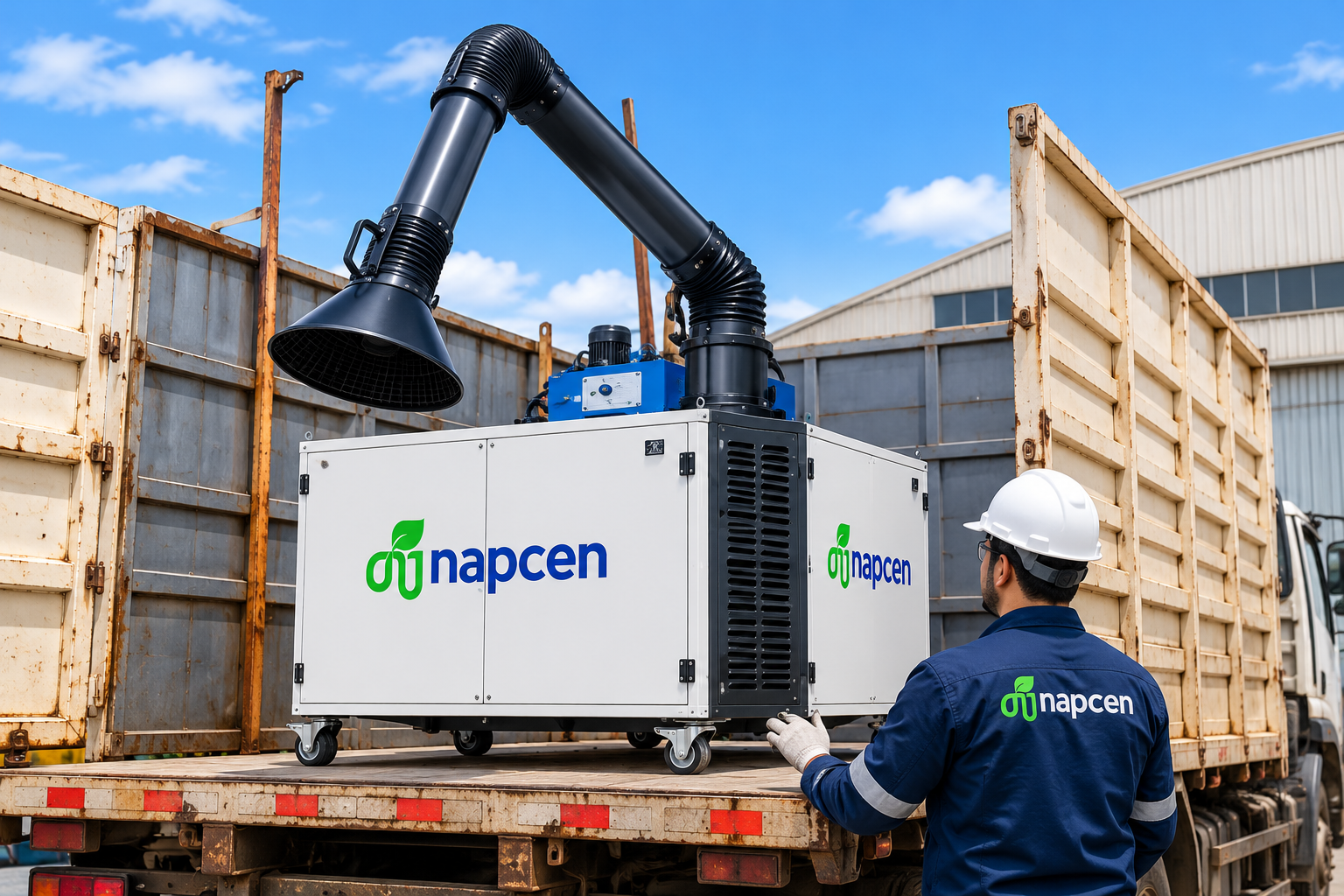
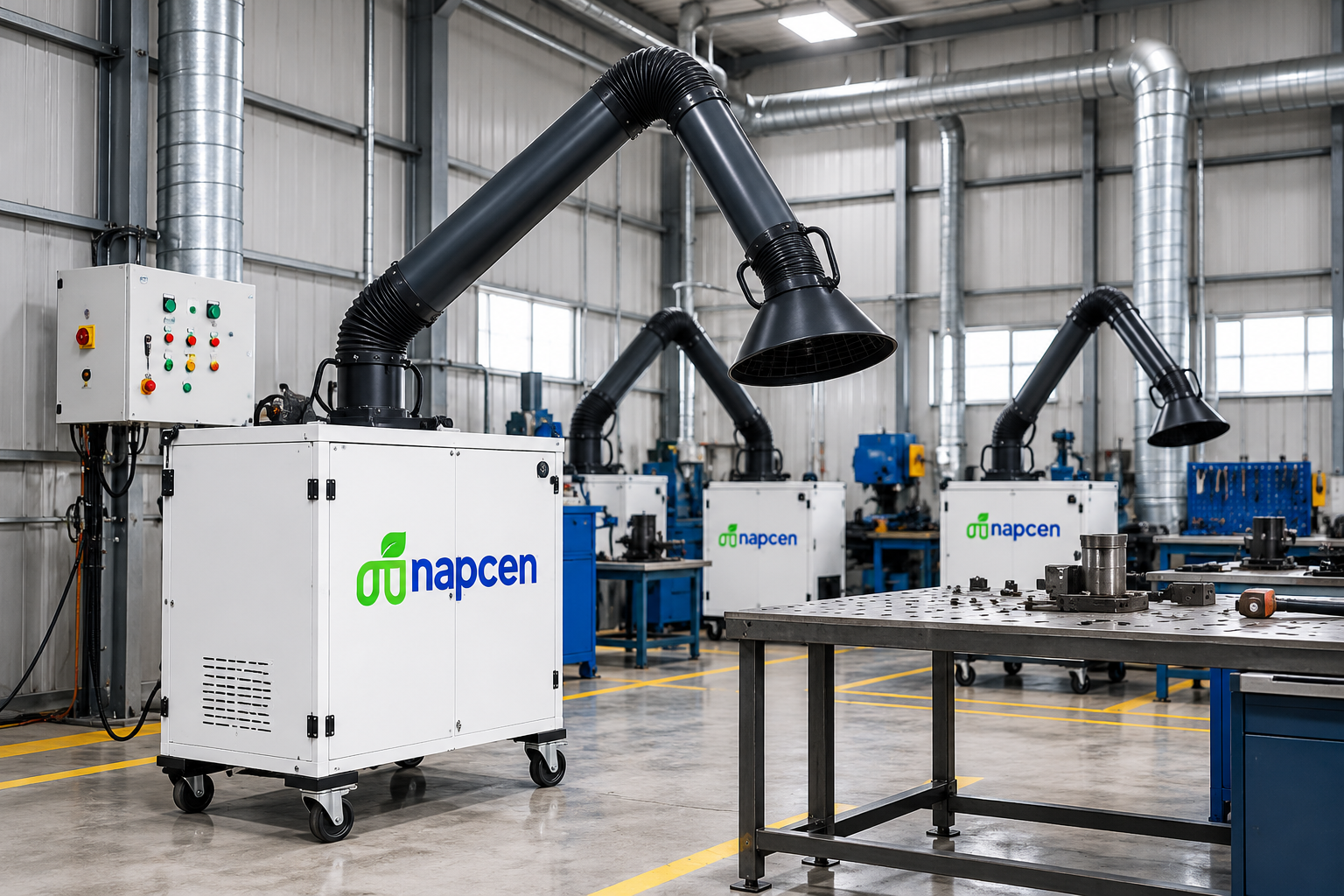
Images are supplied equipment visualizations; schematic illustrations explain extraction methods. Neither represents a verified installation or a model specification. Final equipment configuration, performance and scope depend on the agreed design basis.
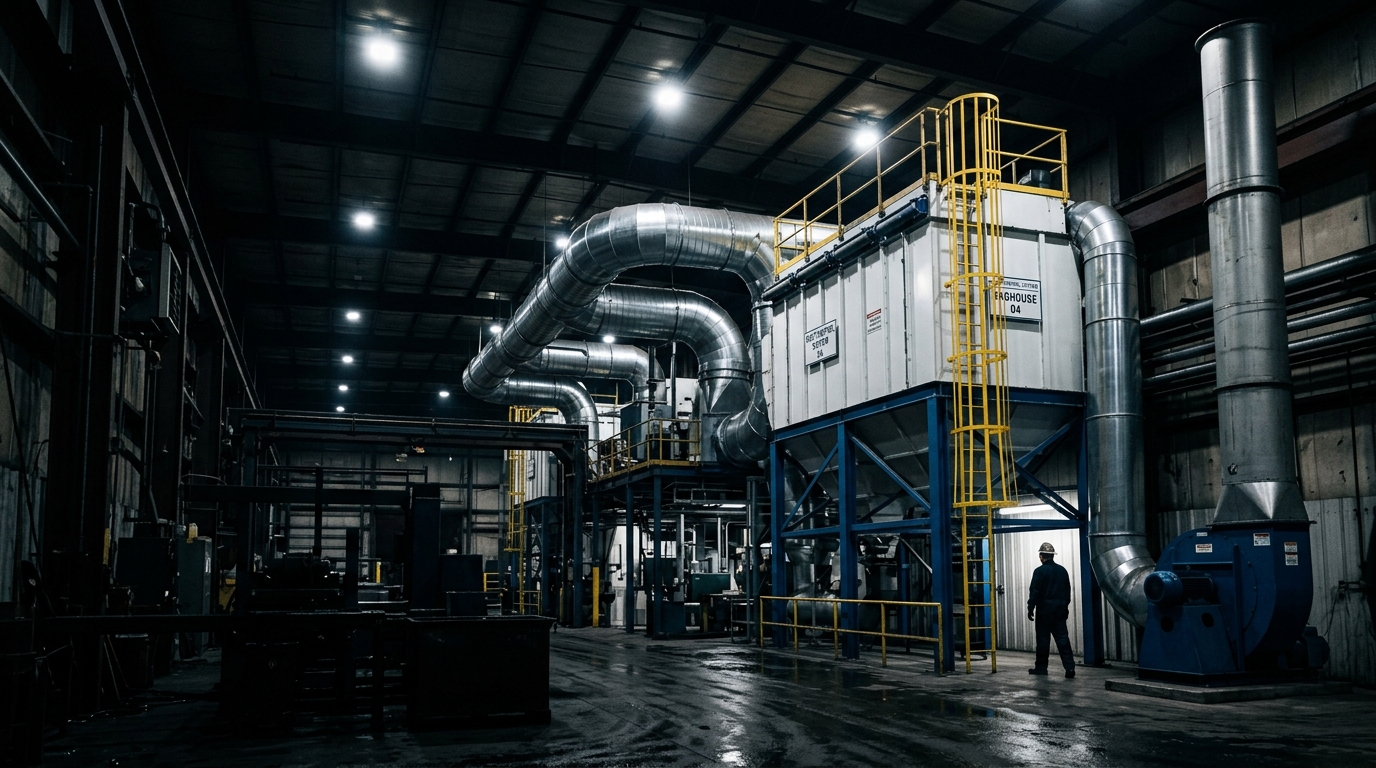
From process emission
to controlled discharge.
Capture performance depends on the whole air path. Hood placement, duct resistance and filter condition matter as much as the extractor itself.
Collect near the source
Position the hood or enclosure to intercept the plume while allowing the task to be carried out comfortably.
Move the air
Size the extraction path around required flow, pressure losses and simultaneous workstation use.
Match the filtration
Select particulate filters, suitable adsorption or other treatment according to the identified pollutants.
Verify the result
Check airflow and filter condition. Plan replacement and assess outlet quality against the agreed design basis.
What does your process produce?
Select a process to see useful information to include in your enquiry. Industrial fume extraction should fit the process, operator access and machinery layout.
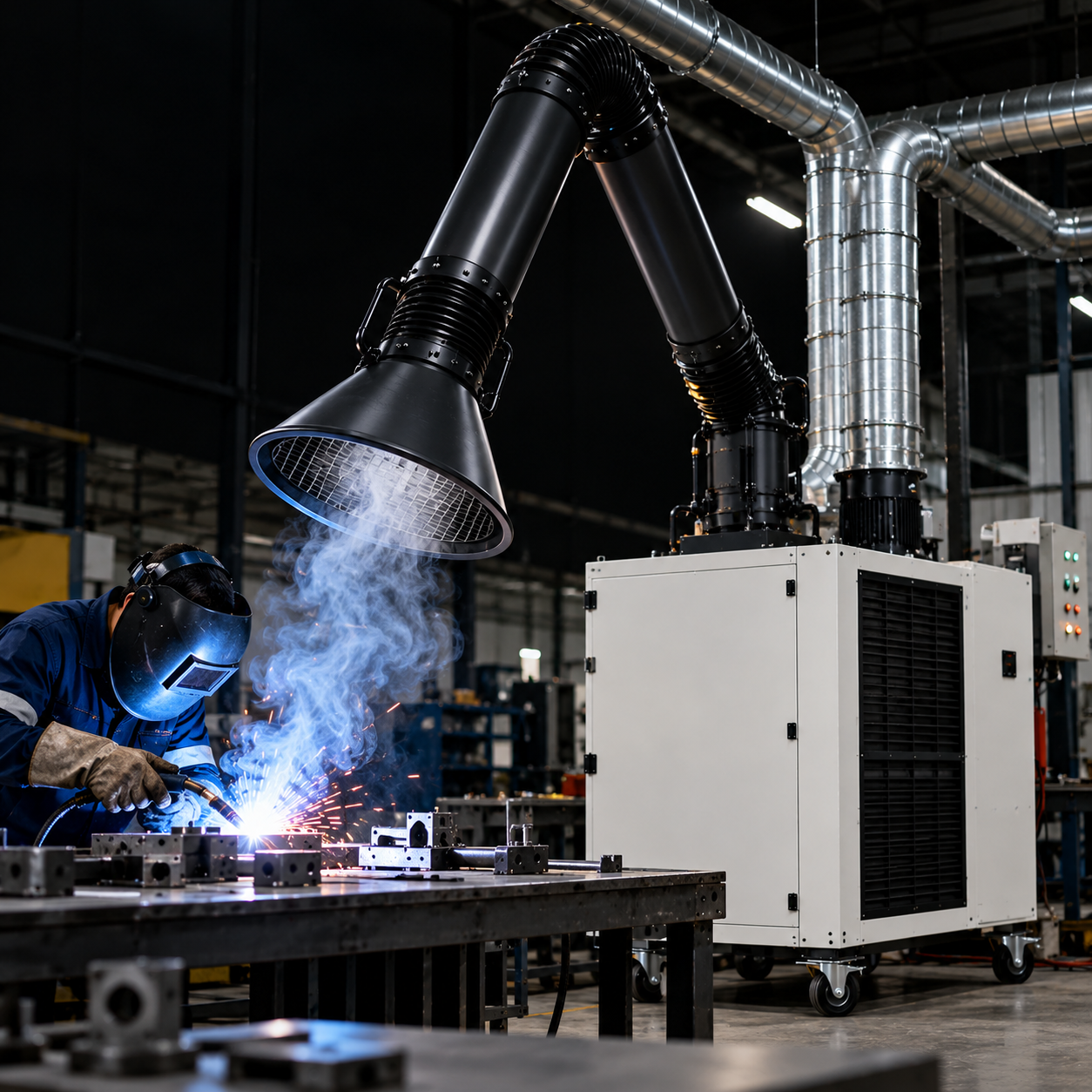
Engineered for Your Specific Process & Emission Type
Unsure which extractor you need?
Describe the operation and choose “Recommend a system” in your enquiry. Our team evaluates your airflow, material and site requirements.
Welding fume extraction
Capture welding smoke closer to the arc.
Share the welding process, base metal, consumables, number of stations and daily operating hours. Capture position should support access without disrupting shielding gas.
Welding process, base metal, consumables, number of stations and daily operating hours.
Capture position should support workstation access without disrupting shielding gas.
Laser fume extraction
Fine-particle and process smoke control.
Share the laser process, power, materials, enclosure details and duty cycle. Assess the actual material emissions before specifying particle and vapour treatment.
Laser process, power, materials, enclosure details and duty cycle.
Assess actual material emissions before specifying particle and vapour treatment.
Soldering fume extraction
Point-of-soldering flux smoke capture.
Share flux type, soldering method, bench layout and simultaneous users. Include safety data sheets to assess particulate and vapour treatment requirements.
Flux type, soldering method, bench layout and simultaneous users.
Include safety data sheets to assess particulate and vapour treatment requirements.
Laboratory fume extraction
Chemical containment and local exhaust.
Share chemical names, safety data sheets, concentration, temperature and task details. Review containment, construction and exhaust treatment together.
Chemical names, safety data sheets, concentration, temperature and task details.
Review containment, construction and exhaust treatment together.
Gold fume extraction
Melting, refining and precious metal recovery.
Identify melting, casting, welding or refining steps separately. Include metal loading and any acid chemistry so each emission can receive suitable treatment.
Identify melting, casting, welding or refining steps separately.
Include metal loading and any acid chemistry so each emission receives suitable treatment.
Printing fume extraction
Solvent, VOC and press emission capture.
Share printing method, ink and solvent safety data, production hours and capture locations. VOC composition and loading determine suitable treatment.
Printing method, ink and solvent safety data, production hours and capture locations.
VOC composition and loading determine suitable filtration and exhaust treatment.
Choose by pollutant.
Then choose the filter.
Filter arrangements are project-specific. A particle removal rating alone cannot establish control of vapours or gases.
Filters, accessories and ongoing upkeep.
NAPCEN lists cartridge filters, pre-filters, HEPA filters, activated carbon filters, hoses, blowers and differential pressure gauges. Confirm compatibility with your equipment before ordering.
A useful proposal
starts with
useful data.
Fume extractor price depends on capture points, airflow, filtration, materials, controls and installation scope. Share the actual operating conditions so the proposal can address both equipment and upkeep.
Process
Material, operation, consumables and pollutant information.
Operating duty
Hours, temperature, peak loading and available airflow data.
Performance
Required outlet criteria and applicable process requirements.
Capture
Workstation size, hood location and number of active points.
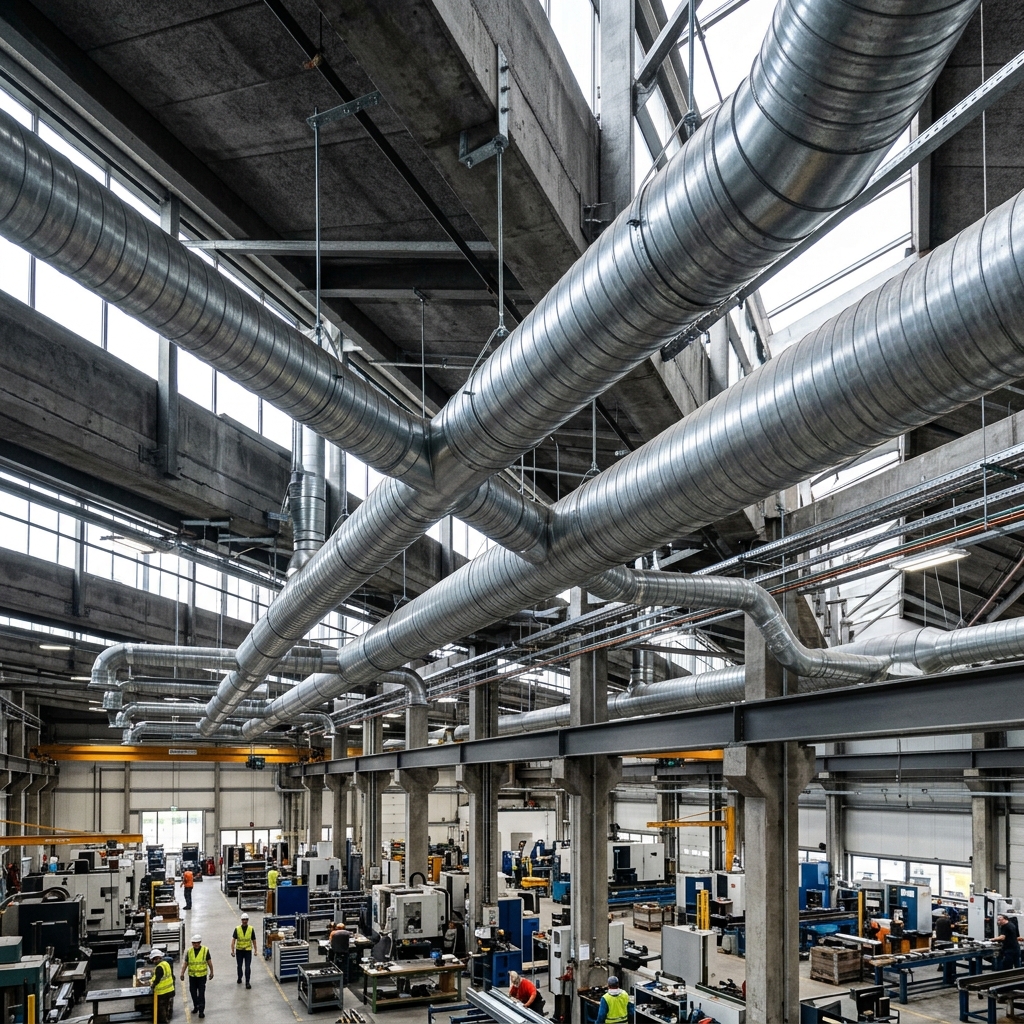
Installation
Layout, duct route, utilities, access and discharge location.
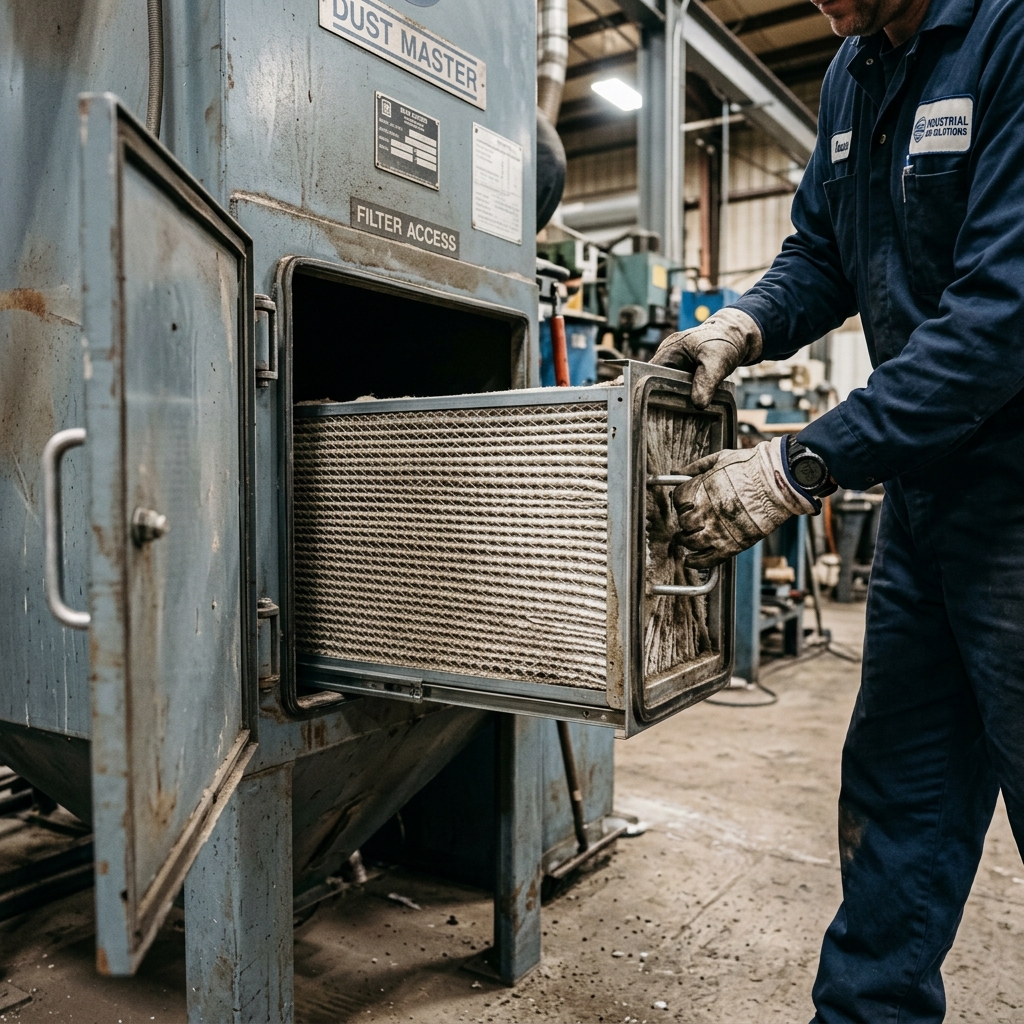
Maintenance
Filter access, replacement planning and waste handling.
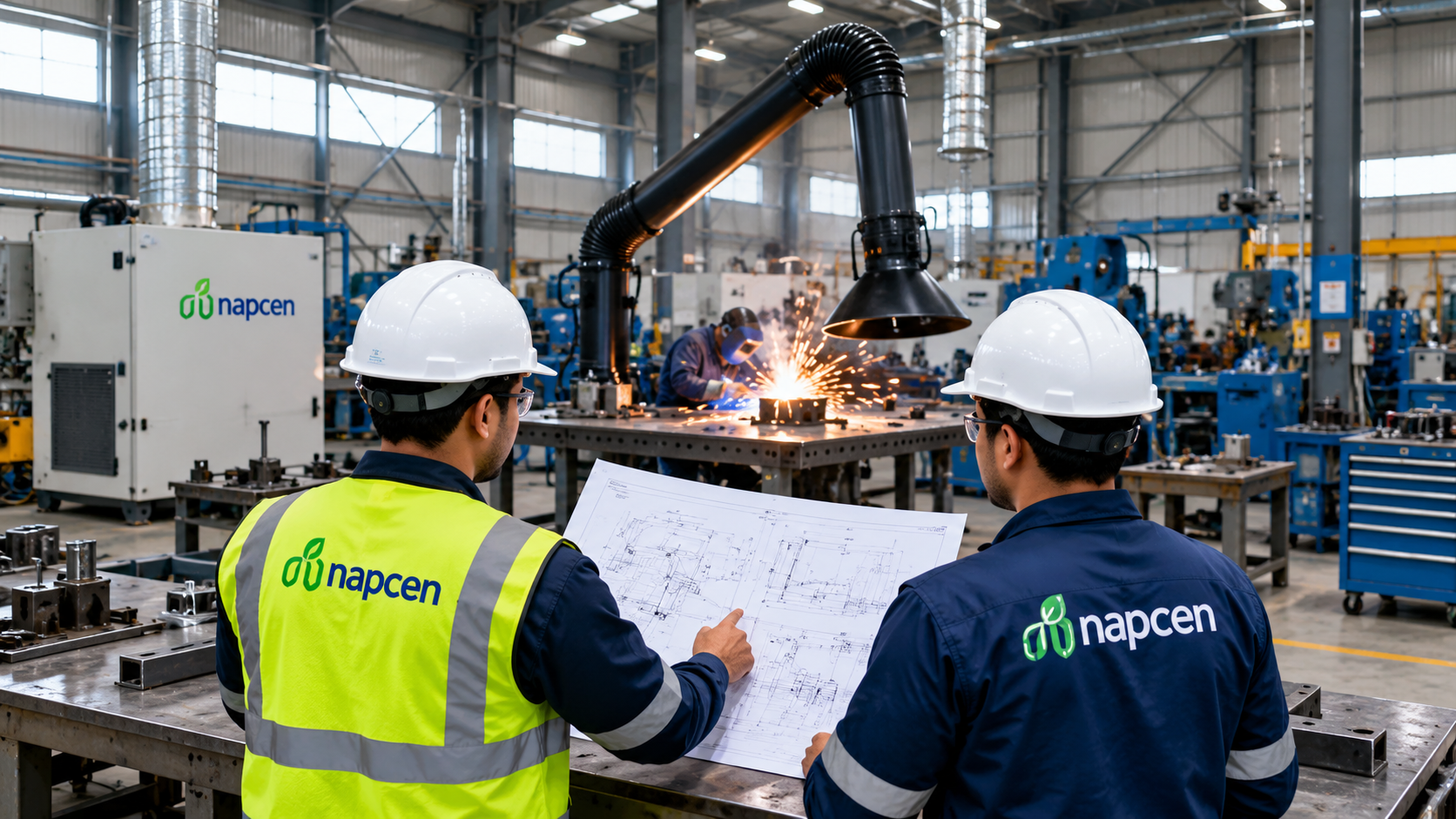
Project workflow – Fume Extractor
From fume control requirement to commissioning and ongoing support
One conversation.
The complete
extraction requirement.
NAPCEN designs, manufactures and supplies industrial air pollution control equipment from Puducherry, including dust collectors, blowers and ducting solutions.
Start with the process
Discuss the material, production task and capture points with a manufacturer whose equipment range spans dust collection and industrial extraction. The selected collector should fit the actual duty.
Connect the equipment
Bring collector, fan, ducting and discharge requirements into the same specification. Define supply boundaries clearly so procurement and production teams can assess the proposed arrangement.
Make support explicit
Discuss drawings, installation coordination, commissioning and ongoing support before ordering. Confirm the services and documentation included for your site rather than relying on assumptions.
Fume extraction,
made clearer.
Practical answers for equipment selection, filtration and quotation planning.
Need industrial air
pollution control equipment?
Start a technical discussion with NAPCEN engineers. We analyze your process to provide the most effective pollution control solution.
Puducherry, India - 605110
Request a quotation
Provide your process specifications, and our engineers will evaluate the requirements for a customized solution.
Get my quotationEnquiry data & privacy
Your enquiry details are submitted securely to NAPCEN's engineering team for prompt technical review and customized quotation. We do not sell or share your contact information with third parties. For direct communications, you can also reach us at info@napcen.com.